
Podcast: Play in new window | Download
So, how to do kindergarten in your homeschool? Whether you’re brand new to homeschooling or simply wondering how to create a meaningful kindergarten year at home, let’s dive into the possibilities.
🎥 Want to see exactly how I’d do it differently after 20 years of homeschooling?
Homeschooling kindergarten offers a unique opportunity to create a personalized and engaging educational journey right from the beginning. You learn to nurture their natural curiosity (& watch them learn without direction), foster that love for learning everyone talks about, and build a strong foundation for a purposeful, unique future.
You won’t get clear on your ideas about homeschooling straightaway. Just consider this year as a learning opportunity for you: learning about how children learn, learning about your specific child, learning how to relate to your child, learning what you need, and building a supportive community too.
Get your Confident 1st Year Homeschool Roadmap and watch my exclusive video “How I Would Do Kindergarten Differently, Fifteen Years Later” where I share the simple framework that makes kindergarten homeschool joyful, not stressful.
In this “How to Do Kindergarten in your Homeschool” guide:
- Is Homeschool Kindergarten Right for Your Family?
- My Kindergarten Journey: From School to Homeschool
- How to Do Kindergarten in Your Homeschool: What You Actually Need
- Simple Daily Activities & Routines
- Resources & Next Steps
Is Homeschool Kindergarten Right for Your Family?
I didn’t actually contemplate whether I should homeschool kindergarten.
My oldest was already in kindergarten when I discovered home education.
I had picked up a book called The Homeschooling Option: How to Decide If It’s Right for You after hearing from another family that they were considering homeschooling. This seemed backward and inconceivable to me. Surely I would not have the patience. Surely I would never exercise again or think two consecutive thoughts or be alone anymore. And surely the school system existed for a reason: why recreate it?
I definitely saw the challenges of this life immediately.
But here’s what I also saw:
My daughter wasn’t really learning that much in kindergarten. She may have picked up on some things in class, but there wasn’t any challenge. She was primarily there for social reasons—which isn’t bad, but it’s also not particularly good either.
I noticed she was super tapped after class and wasn’t emotionally able to regulate as easily as she had been before.
And practically speaking? I had to drive 20 minutes each way to pick her up and drop her off—with a toddler and a baby in tow. I had to wake my baby up at nap time to go get my daughter.
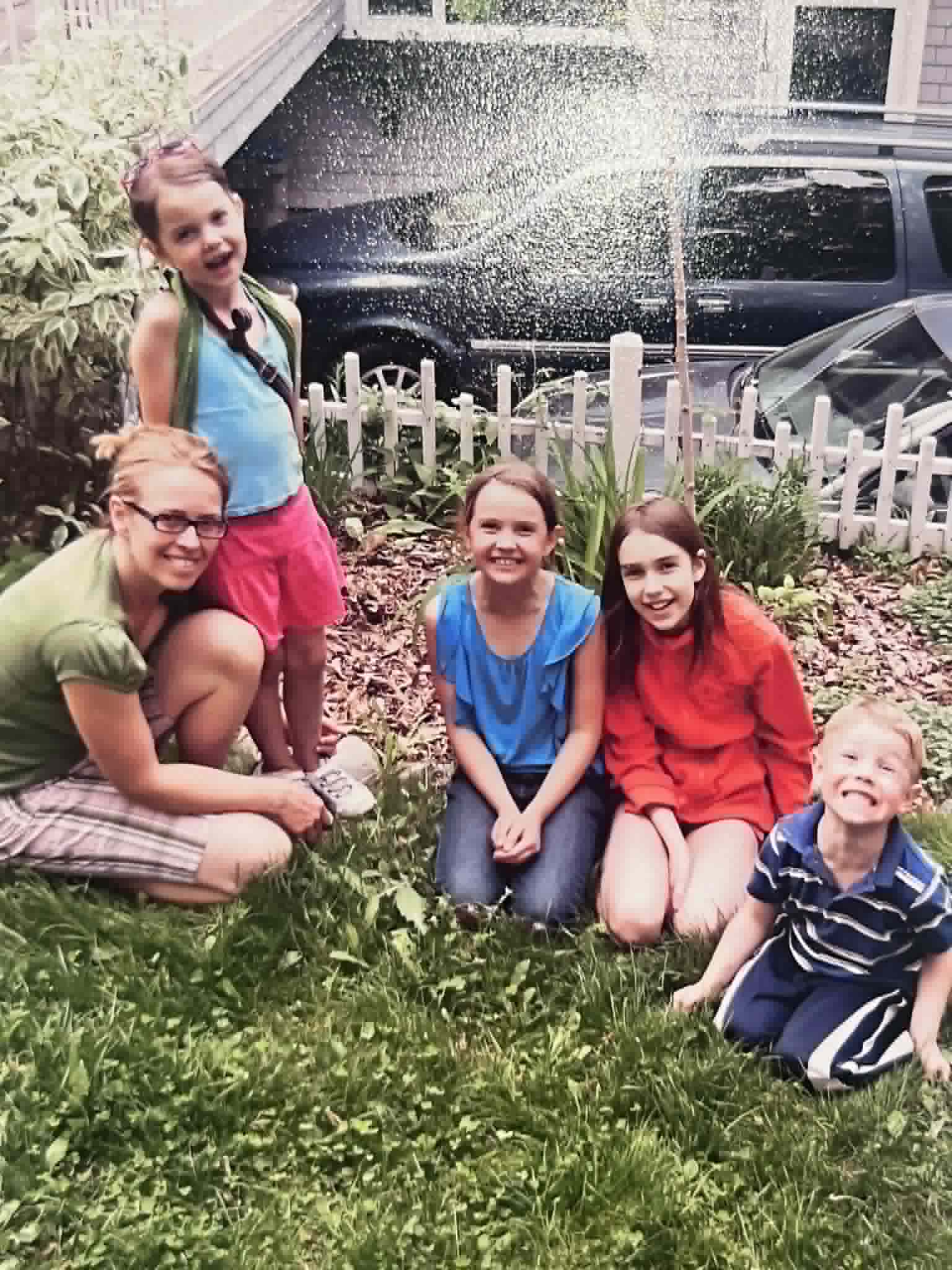
Meanwhile, I had already started doing activities with my second daughter at home: her ocean sticker book, her letter book, crafts, all sorts of fun activities I’d stashed in a kitchen cupboard. When I returned home from dropping my daughter off, I’d clean up the massacre of a kitchen, wash my face (hopefully), and then we’d sit and do activities for an hour at the table.
I was already homeschooling. I just didn’t know it yet.
That’s when I started seriously asking myself: how would I do kindergarten in my homeschool if I pulled her out? What would it actually look like?
Fast forward two decades: I’m selling all my homeschool curriculum two summers ago (or at least some of it), and families with six-year-olds are in my great room. Each of those kiddos was very different, but each of them was very smart and asking very interesting questions—and mom would eagerly answer all of those questions.
After two decades of home educating four kids and supporting hundreds of homeschool families and their children, here’s what I’ve learned:
A profound education could be provided for a child simply by answering all their questions.
(By the way, don’t try to do that because it would be exhausting. But nonetheless, a very meaningful, purposeful education could be brought to a 4, 5, or 6-year-old just by answering their questions.)
“But Is My Child Ready? Should We Start at 4, 5, or 6?”
What is the right age for formal learning?
Certainly there are books and research studies and a conventional education system that has many opinions on this. But I’ve raised four children, and these are my anecdotal notions:
Kids come out of the womb wanting to understand and learn things.
They want to learn different things. It’s hard to entice them toward certain things because they just don’t care about those things. But then they are deeply and eagerly interested in other things, and they want to follow those rabbit trails.
This is so because we’re all different.
I’m sure you and I could speak to our own experiences learning since very young and focusing on various topics throughout the two decades we spent growing up to become adults. But we are certainly all different.
So how do you answer whether a child is ready for formal learning activities?
The answer? Observe them.
- Do they want to?
- Are they asking you to sound out words, read a book, explain something?
These are your first obvious signs.
Here are some additional questions to help you assess readiness:
Signs Your Child May Be Ready for Some Structure:
- Can they focus on a task they enjoy for 5-10 minutes?
- Do they show interest in letters, numbers, or books?
- Are they asking “why?” and “how?” constantly?
- Do they want to “do school” like an older sibling?
- Can they follow simple two-step directions?
- Are they showing curiosity about how things work?
Signs They’re Not Ready (And That’s Completely Okay!):
- They can’t sit still for more than a minute or two
- They resist any kind of directed activity
- Or they’re still in a very physical/sensory exploration phase (climbing, running, touching everything)
- You’re exhausted just thinking about adding “school” to your day (girlfriend, this matters!)
- They show no interest in letters or numbers yet
- They need lots of free play time
My youngest likely sat longer than most of his peers—especially boy peers—but that’s because he’d been doing studies with us since he was military crawling at 8 months. I share more about how this natural rhythm developed in 7 Things to Structure a Grade 1 Homeschool Curriculum.
Here’s the truth: There’s no universal “right age.”
For my own kiddos, I knew that reading was an expected cultural expectation for kids around 5 or 6. So I sat down and read books with my first daughter. At the time, I wasn’t taking the cue that it was challenging for her. I was determined to get my child to read—even if she wasn’t capable yet—mostly because I wanted her to avoid the frustration of her Grade 1 teacher who had a reputation.
My first child began reading at 5.
With my second, I sat down to read with her and she naturally wanted to sound words out.
My second child began reading at 4.
Then, when I had come to understand that a child typically reads around the age of 5 or 6 and I was ready to “teach” my third child how to read, I discovered she was already reading! She was three—an exceptionally young age. So I tried to teach her phonics, which didn’t particularly matter at that point, but I did it anyway because “that’s what we did.” I didn’t spend a lot of time doing it because she didn’t care—but she was reading anyway.
My third child was reading at 3.
And my youngest kiddo? Because he was a boy instead of my three girls, I was concerned that he would be above the average reading age. (It’s not unusual for boys to be more challenged by reading.) My first child was 5 when she began reading, my second was 4, my third was 3… so I assumed my fourth might be 13! I joked. But I wasn’t sure.
Sure enough, he was six. (And absolutely delights in his physics textbooks at seventeen, presently.)
My fourth child began reading at 6.
Every kiddo is unique.
Want to see what this looked like in practice? I share a detailed case study of how I personalized kindergarten for my six-year-old in How to Create a Homeschool Kindergarten—from his chess obsession to his approach to reading and how he learned alonimagegside his older sisters.
And here’s what matters more than the age they learn to read: Did they maintain their love of learning? Did they stay curious? And did reading and learning become joyful, not forced?
The answer for all four of my kids? Yes.
Because I learned to follow them, not a predetermined timeline.
Worried about when your child will learn to read? I share the complete story of how all four of my kids learned at totally different ages (3, 4, 5, and 6!) and what I learned about reading readiness in How to Teach Kids to Read: A Tale of Four Homeschool Kids. Then grab your Confident 1st Year Homeschool Roadmap here so you can start with confidence, clarity, and calm.
How to Do Kindergarten in Your Homeschool: What You Actually Need (vs. What You Don’t)
When I first started, I thought kindergarten needed to include specific school subjects: social studies, science, geography, logic, critical thinking, debate—you fill in the blank.
I suppose everything. Even in kindergarten! Ha.
I knew that I wanted to include writing activities, reading activities, and number activities.
Here’s what I’ve come to learn:
Reading a boatload of books, just having fun together, learning about the world together, going places, meeting people, exploring—that is all you need to do.
It really is.
Kindergarten should be your most fun homeschool year.
(Spoiler alert: It might be a challenging year if you have other kids that are littler—but that’s more about them being littler. Also, every homeschool year is amazing if you build your Burnout Prevention Plan.)
You definitely don’t need:
- Formal curriculum for every subject
- Worksheets for science, social studies, geography
- Tests or assessments
- A structured 6-hour school day
- Desks and classroom setup
- To replicate what traditional kindergarten does
What you DO need:
- Books (lots of them, from the library is cheap)
- Time outside every day
- Conversations with your child
- Freedom to follow their interests
- Play (SO much play)
- Patience with yourself and your child
As I share in my full story about discovering homeschooling in The Homeschooling Option: How to Decide When It’s Right, the most important realization was this:
I wasn’t trying to create school at home. I was creating a personalized learning environment for my unique child.

Common Fears About Homeschool Kindergarten (And What I Actually Discovered)
Fear #1: “My child needs to be with other kids all day to be socialized.”
Here’s what I observed between how I homeschooled kindergarten and how kids were “socialized” in traditional kindergarten:
Kids don’t really care who they’re hanging out with.
Some kids don’t want to spend a lot of time with other kids (kindergarten was overwhelming for them). Other kids love being with other kids all day long. But I haven’t noticed a lot of kids being especially discerning about who their playmate was until adolescence. (I’m sure there are exceptions).
So the notion that kids need to be socialized in a classroom appeared wildly dissonant to me.
My homeschooled kindergarteners socialized with:
- Siblings of all ages
- Neighbours
- People at the library
- Elderly folks at community events
- Teenagers at co-op
- Adults in real-world settings (post office, grocery store, church)
This is real socialization—not age-segregated classroom management.
If you want more on the socialization question, I dive deep into it in A Beginner’s Guide to Your First Year of Homeschool—including how my homeschooled teens transitioned to public high school and were more confident and at ease than their peers.
Fear #2: “I can’t possibly give my child the same education as a classroom teacher with 25 students.”
You’re right. You can’t.
You can give them something FAR better.
When you have that many kids in a classroom, it’s hard to personalize learning—it’s just a lot of kids. If a homeschool mom who had 25 children was trying to homeschool them, she’d have a hard time too (and possibly a nervous breakdown).
But within homeschool kindergarten? We could do all sorts of activities in 20 minutes that might take an entire school day in a classroom.
(FYI: 20 minutes is not the magical amount of time you should do formal learning for a kindergartener—that time doesn’t exist. Frankly, there is no specific formal learning time required. Again, just watch your kiddo. See if they are still with you, care about the topic, and are fully engaged. If they’re not, stop.)
Fear #3: “What if I mess them up academically?”
Let me tell you what matters at age 5 or 6:
- Curiosity (are they still asking questions?)
- Confidence (do they feel capable?)
- Connection (do they feel seen and heard?)
- Joy (do they associate learning with fun?)
Academic skills? Those come. Reading, writing, math—they all come.
Some kids at three, some at six, and some at nine. All of them learn eventually.
What you can’t recover easily is a child who has learned to hate learning, who has been pushed too early, who has been made to feel “behind” or “not good enough.”
Your job in kindergarten is not to produce a miniature scholar. Instead, your job is to protect their natural love of learning.
If you’re worried about getting it wrong, I want you to read A Beginner’s Guide to Your First Year of Homeschool where I share the five most important things I learned—including why your expectations will likely be too high, and that’s actually okay.
Fear #4: “What if there are gaps in their education?”
Here’s what I learned after two decades:
There are ALWAYS gaps. Even in traditional school.
My daughter who went to kindergarten had gaps. My homeschooled kindergarteners had different gaps. Kids who went through the best private schools had gaps.
My husband, who is a medical physician, who can resuscitate your heart and bring you back to life after cardiac arrrest cannot clear a kitchen sink that’s plugged; actually, he’s been learning that recently, ha, but ya know what? He’s got gaps!
We all have gaps.
The question isn’t “Will there be gaps?”
The question is: “Will my child know how to learn? Will they be curious enough to fill in gaps when they need to?”
And homeschool kindergarten—done with fun, curiosity, and freedom—creates excellent learners.
These fears are exactly why I created The New Homeschooler’s Quick Guide: 9 Mistakes to Avoid for a Stress-Free First Year [$7.99]. Inside, you’ll get confident responses to family questions, strategies for managing expectations, and a framework for creating a homeschool that actually works for YOUR family—not someone else’s Instagram version. Grab your copy here.

The New Homeschooler’s Quick Guide: 9 Mistakes to Avoid for a Stress-Free First Year
“The New Homeschooler’s Quick Guide: 9 Mistakes to Avoid for a Stress-Free First Year” will help you confidently begin your homeschooling journey! This Quick Guide, crafted by an experienced homeschool parent, is your roadmap to a successful start.
What Happens After Kindergarten?
Once you’ve completed your fun, play-based kindergarten year, you might wonder: what’s next?
The beautiful thing is that homeschool first grade isn’t that different. It’s simply a continuation of following your child’s interests while gently adding more structure as they’re ready.
Spoiler alert: grades are an unnecessary construct in the home education, but definitely let your kids know occasionally WHAT grade they’re in so grandma and the curious grocery store clerk aren’t worried.
I share exactly how this transition looked for my six-year-old—including math, reading, memorization, and second language learning—in Unlock Success: A Grade 1 Homeschool Case Study for Your Six-Year-Old.
Feeling overwhelmed by all this information? You don’t have to figure this out alone. Book a free Aligned Homeschool Reset Session with me, and we’ll create clarity around your specific situation—whether you’re just starting kindergarten or transitioning to first grade—then you can learn how I can walk alongside you in your first year!
Or if you want comprehensive, independent support for your entire first year, check out Confident Homeschool Mom 101—my step-by-step course that takes you from confused and overwhelmed to clear and confident. Learn more here.
So… Is Homeschool Kindergarten Right for YOUR Family?
Here’s how to know:
Ask yourself these questions:
- Do I feel uneasy about sending my 4, 5, or 6-year-old away for most of the day?
- Do I want to be the one answering my child’s endless questions?
- Am I willing to let go of “school” expectations and follow my child’s lead?
- Do I believe my child can learn without a classroom?
- Am I open to this being a learning journey for me too—not just my child?
If you answered yes to most of these, homeschool kindergarten might be exactly right for you.
You don’t need to have it all figured out. You certainly don’t need the perfect curriculum or the perfect plan.
If you’re feeling overwhelmed about where to start or what you need to know as a brand new homeschool mom, I’ve compiled my Top Tips for New Homeschool Moms specifically for families just like yours—covering everything from defining education on your own terms to creating a burnout prevention plan.
You just need to start where you are, with the child you have, and trust the process.
As I learned from Lisa Rivero’s book (read my full story in The Homeschooling Option: How to Decide When It’s Right):
“Trust in the child’s ability to learn is the bedrock… All of us have an innate desire and need to learn, not just as children, but for our entire lives.”
Your child already knows how to learn.
You already know how to teach (you’ve been doing it since they were born).
Kindergarten is just the beginning of a beautiful, personalized life learning journey.
And if you’re feeling overwhelmed about where to start? I’ve got you. Keep reading for exactly how to do kindergarten in your homeschool—the simple, joyful, effective way that protects your child’s love of learning.

My Kindergarten Journey: From School to Homeschool
Now that you know homeschool kindergarten might be right for you, let me tell you my story—because it started in the most unexpected way.
Kindergarten is a rite of passage, right?
I put my first six-year-old daughter on the bus at the end of the block, then I went directly home to load my other two little ones into the minivan and followed that yellow bus to the school that I had registered her in.
Yeah, I followed that bus!
My oldest daughter bumped along the gravel road on that green vinyl seat while chatting with a new friend.
She checked out the first graders behind her and the second graders behind them and behind them, third graders until the bus was bookended with high schoolers.
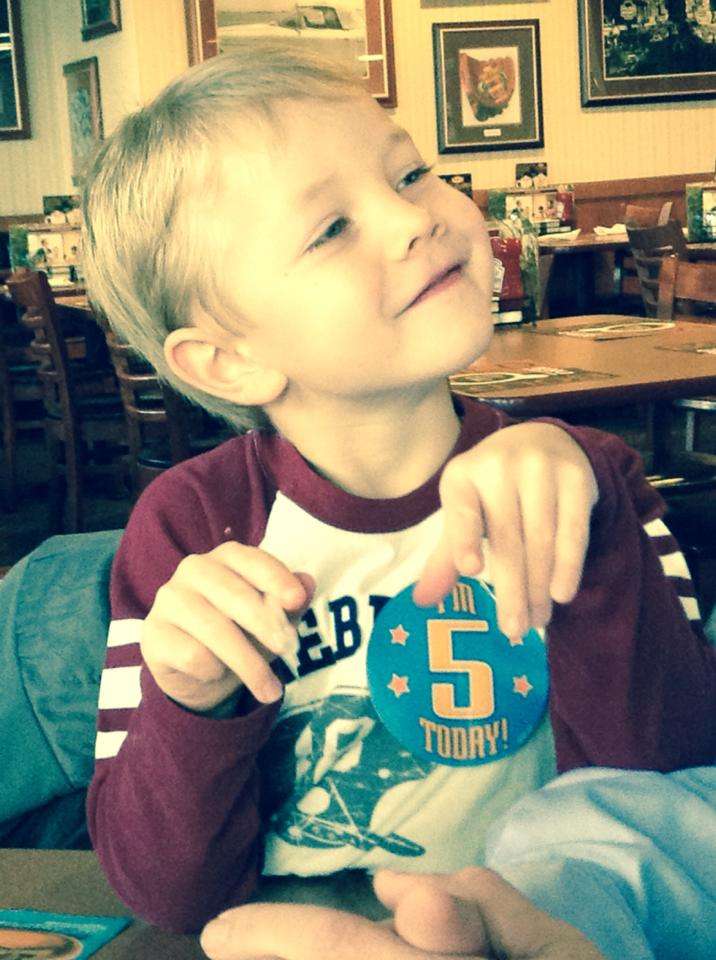
My six-year-old daughter looked out that wide window, past the railroad tracks, past the silos, past the silky yellow fields, to the gigantic butter-colored school in anticipation.
I would grieve this day (or celebrate it) by chasing that yellow bus with my camera in the ready position.
You’d see me balance that camera on top of the steering wheel, stick it out the side window, and photograph those few miles for my scrapbook.
This was a momentous day, my daughter began her journey toward independence, at age six.
Just 1,990 days before, she and I traveled a different path: from the hospital post-partum ward to her cradle in our first apartment.
And just 1,990 days before, she fed directly from me, she bathed because daddy brought her to the foldable tub on the dresser, and she slept because I held her in my arms.
Her days of dependence were coming to a close.
When I’d pulled that minivan into the school parking lot, I slowly crept by the bus to capture her first descent off those three black steps…click click click.
“Good job, Hannah,” I yelled.
(I’m not sure what I thought she did well. It was me that should have been congratulated. I had managed to stay on the road with a squirming toddler and a baby while I perilously photographed that bus while I drove.)

So, fast forward six years: my youngest is getting his hair cut. The stylist asks how I want his hair prepared for his first day of kindergarten.
Hmm, kindergarten? But he’s four!
The cut-off date is January, she tells me. Parents can decide whether a child goes to kindergarten now. It’s your choice.
Hmm, somehow his kindergarten years slipped from my awareness (not that I would ever have considered kindergarten at four).
But I hadn’t been thinking about my son going to any school, because he was the youngest of four kids. We were homeschooling!
I wasn’t thinking about grades at all anymore.
Rather, I was facilitating an education for each of my kids based on interests first and also incorporating things I thought were important.
Kindergarten: days of play centers, introductions to line-ups and bagged lunches, sounding out letters and counting manipulatives, reading stories at the foot of a teacher, resting on blankies at quiet times, and swinging on playground equipment at recess.
Kindergarten: days of play centers, introductions to line-ups and bagged lunches, sounding out letters and counting manipulatives, reading stories at the foot of a teacher, resting on blankies at quiet times, and swinging on playground equipment at recess.
I decided to skip the mile-drive camera in hand for my four-year-old. I’ll simply photograph him on the front porch.
Those first 1,990 days slipped silkily through my fingers like one long night. I’ll try to keep closer to my youngest son’s next 1,990 days and keep him home to learn and play.
Now, what would I do with him at home?
It would be pretty simple.
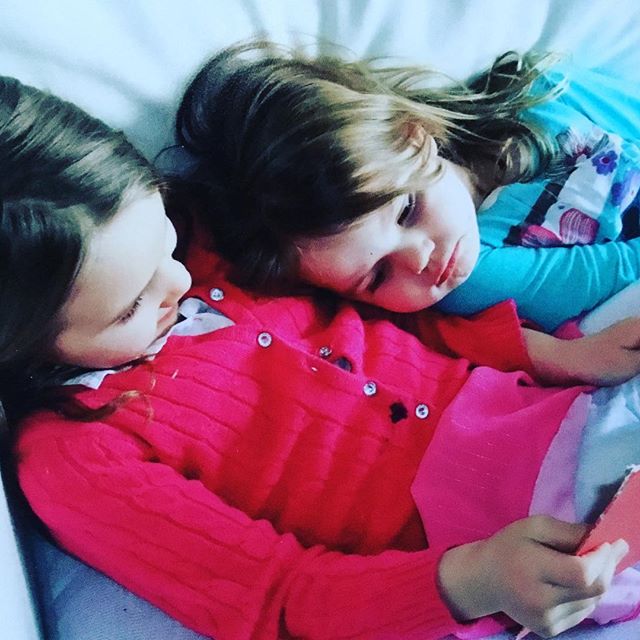
How to do kindergarten in your homeschool? Tips how to do your kindergarten year…
Simple Daily Activities & Routines
This would be my version of kindergarten homeschool if I did it all over again:
Of course, we’d read books together.
And enjoy the books. We’d tote home dozens of hard-covered storybooks every week from the library (& we’d probably routinely pay hefty library fines too because we’d forget where we put them all: welcome to homeschooling!)
Oh, and I’d let my kiddo play with Lego, dolls, draw, or whatever will keep his hands busy, while I read for a little bit (“a little bit” might mean five minutes or sixty.)
I’d think learning opportunities, not school subjects.
Also, I’d definitely do Five in a Row. What a fun curriculum.
(But if something stopped being fun, I’d STOP doing it.)
I’d use a workbook, like Evan Moore’s books or something like it, for maybe printing or number recognition or addition (if my kiddo didn’t have to work too hard to do the activity).
However, I’d only do it if my kiddo wanted to do it and I’d only do it in a subject my kiddo wanted and only for fewer than twenty minutes each day unless my kiddo wanted to do more.
THE MORAL OF THE STORY: I’d follow my kiddo.
We’d do clockwork practice with a simple clock.
In other words, I’d explain to him how to use a clock. Yes, an analog version, oh and probably a digital version, because that’s the world he mostly lives in.
A minute or two a day is all I’d need to explain it. Just a basic introduction would be all he’d need. Because I would know that a teeny exposure to any subject will make an expert, or at least make someone capable, in a few short months.
Naturally, there’d be nature study, because I love it.
We’d go outside every day.
Then we’d walk, look at leaves, discover what’s hiding under logs in a pond, listen to birdsong, lay in a field, search for mushroom in the spring, and stare up at the sky in the summer: whatever, we’d just hang out in nature together.
We’d create a routine and regularly use it.
A simple routine. One that didn’t force us to wake too early, but still allowed us to be present in the morning hours.
One that honoured the other kiddos in the house.
Definitely create a routine that got my kids, and me, enough sleep.
One that included my natural interests and his, and one that included my natural rhythms too.
I’d learn flexibility when the routine wasn’t working and wouldn’t do it when it wasn’t.
And since I know you want to know about routines, here is what I’d say more on that.
Oh, and we wouldn’t do more.
I wouldn’t try to be competing with a local private school, trying to convince myself that whatever I was doing really was more effort and more brilliant than a private school education. (Although in my real life homeschool, two decades ago, I definitely did that!)
Because I’d know I wasn’t trying to make a school at home!
I’d alter my expectations: my home is not a school.

Every day, we’d chart the weather.
Together, we’d begin to discover different cloud forms, temperature shifts, barometers, and thermometer use.
Our money would be spent on Home Science Tools or KiwiCo or at-home experiment boxes.
Because I love science, we’d dabble in science fun.
We’d do poetry teatime every day.
Cause it’s fun.
And we’d read any poetry book that struck us as fun.
Or just because it’s pretty.
We’d include other fun days and create traditions around them even.
Like…
- 15 ways to incorporate fun into your homeschool
- 15 Fun Activities for the First Day of Homeschool Party
- 14 Fun Activities to Include in a 100-Day Homeschool Party
- How to Make Halloween Homeschool Fun & Educational
- How to Incorporate the Happy Homeschool Hygge, Twenty Easy-to-Adopt Practices
- How to Use Little Women in Your Homeschool Celebrations
- Egyptian Part-ay: Homeschool History
- 24 Favourite Things in my Homeschool Christmas
We’d explore art while we read.
Just because I love it. (I’d learn to do things I loved to do with my kids.)
- How to Engage Art History in Your Homeschool in a Child-Directed Way
- how to do homeschool fine arts even if your kids don’t want to
- How to Do Fine Arts in your Homeschool in a Child-Directed Way
- how to do homeschool fine arts study
Certainly, I’d let them play.
In fact, incorporate play, a LOT of play, into our day.
Because I’d be confident that playing was learning.
I wouldn’t fuss about reading, writing, or arithmetic.
But identify when we’re doing reading, writing, and arithmetic naturally in our days.
And I’d ask myself, what do I need?
And I’d start practicing that question, a lot.
Like incorporating quiet moments, separate times, or dealing with conflict in a respectful way.
I’d seriously consider what I need and determine to include myself in my homeschool from the beginning.

Naturally, I’d teach them to cook.
(This might mean making ants on a log, or mac n’ cheese, or having them chop veggies alongside me at dinner: just get them involved early.)
And create a routine with our menu plan, so I wouldn’t feel stressed. Like fish on Monday, chicken on Tuesday, vegan on Wednesday, leftovers on Thursday, and pizza on Friday.
I’d incorporate games into my homeschool on the regular.
All the games. Any games. Whatever games we were into.
Because I’d know that we would eventually play every game known to mankind.
(Oh, and I would make sure to invest in Hasbro stocks. Might as well earn money from all that natural investing.)
Most certainly, I’d read about homeschooling, unschooling, learning, and child development.
I’ve built my homeschool mama reading lists naturally, so I would read.
And I’d make sure I was chatting with other homeschool mamas who were reading too.
Because reading helps me show up on purpose in my homeschool (& my life) if I choose the right influencers.
And I would join the Homeschool Mama Book Club too (but I actually couldn’t do that, because I wouldn’t have created that yet. By the way, it is actually a thing: you can join it here!)
Also, I’d definitely listen to more podcasts.
Like…
- Confident Homeschool Mom Podcast (my podcast)
- Readaloud Revival,
- and Brave Writer with Julie Bogart.
(Of course, none of these podcasts were around when I began homeschooling, but if I could, I would surround myself with a whole bunch of homeschool mamas and learn from them all).
I’d make sure fun was the prime goal of my homeschool kindergarten. Fun and great memories!

Ready to Start Your Homeschool Kindergarten Journey with Confidence?
You’ve learned how to do kindergarten in your homeschool—now it’s time to make it your own.
But I know reading about it and actually doing it are two different things. That’s why I’ve created resources specifically for new homeschool families like yours:
Start Here (Free):
Get Your Confident 1st Year Homeschool Roadmap + watch “New Homeschool Mom? DO THE RESEARCH (But Then Trust Your Child)“—a video where I give you permission to let go and trust.
Go Deeper ($7.99):
The New Homeschooler’s Quick Guide: 9 Mistakes to Avoid for a Stress-Free First Year gives you practical strategies for choosing curriculum, balancing family life, creating personalized learning routines, and confidently answering those well-meaning (but annoying) questions from family.
Perfect for new homeschoolers or those in their early years—this guide addresses real concerns like socialization, patience, and unrealistic expectations. You’ll learn to trust your instincts, embrace flexibility, and celebrate progress.
Want Personalized Support?
Book a Free Aligned Homeschool Reset Session where we’ll:
- Clarify your vision for kindergarten (and beyond)
- Identify what’s holding you back
- Create a simple action plan tailored to YOUR family
Schedule Your Free Reset Session
Or join Confident Homeschool Mom 101, my signature course for first-year homeschoolers. You’ll get step-by-step guidance, practical tools, real-life strategies, and a supportive community to help you move from “Am I even doing this right?” to “I’ve so got this.”
Remember: You don’t need the perfect plan. You don’t need expensive curriculum. And you don’t need a private school structure.
You just need to trust yourself, trust your child, and take the first step.
Kindergarten in your homeschool can be a truly unforgettable experience filled with joy, discovery, and endless learning and exploration—and I’m here to help you make it happen.
People also ask:
- Time Blocking for Homeschool Moms: The Ultimate Way to Simplify & Love it More
- how I transitioned from homeschool to public high school
- 1st-Year Homeschool FAQs: Top Questions every New Homeschooler Asks
- Crush 1st-Year Homeschool Frustrations and Plan a Smooth Year 2
- when you buy new homeschool curriculum: 5 clever suggestions
- you know you’re a homeschooler when you happen to know odd knowledge bits…
- Get started homeschooling here.
- 9 Mistakes That Make Your 1st Homeschool Year Stressful (& How to Avoid Them)
- 7 ways Brene Brown rescued me from one of those homeschool days
- John Holt & Pat Farenga Teach Homeschoolers How to Learn
- Encouragement for New Homeschoolers
- Do you do one-on-one homeschooling coaching?
If you’re feeling stuck: Book your free Aligned Homeschool Reset session with me. We’ll talk through where you are, where you want to go, and whether coaching is the right next step.
You don’t have to do this alone.
Warmly,
Teresa
Book your free Aligned Homeschool Reset Session
I help homeschool moms release pressure, edit expectations, and make small, intentional shifts that lead to a more confident and connected homeschool life.
Subscribe to the Confident Homeschool Mom podcast
Call to Adventure by Kevin MacLeod
Link: https://incompetech.filmmusic.io/song/3470-call-to-adventure
License: http://creativecommons.org/licenses/by/4.0/
